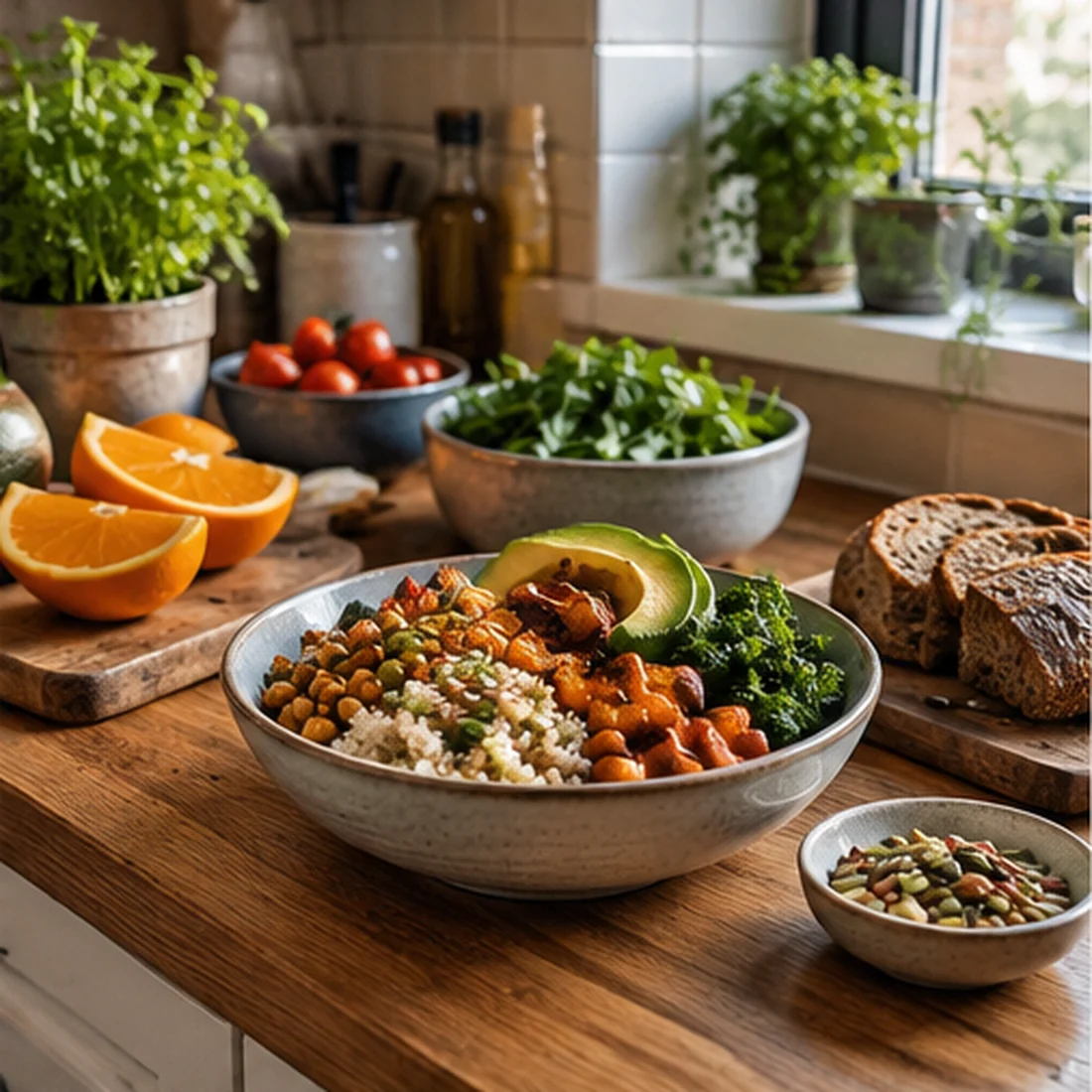
A realistic approach to breakfast, lunch, dinner and the weekly shopping list. Every routine starts with the circumstances of a real day: the time you have, the places you go and the people you share them with. The following ideas are designed to be adapted, not followed as a fixed timetable.
Work from a small selection of favourites
Start with foods you already enjoy and know how to prepare. For one household, that might be rice, vegetables and beans; for another, potatoes, eggs and salad ingredients. Two or three reliable meals can make weeknights much simpler. Add variety when you want it rather than insisting that every evening bring an entirely new recipe.
Keep a list of a few ingredients that appear in several dishes. A tin of chickpeas might work in a salad, a soup or a warm meal with vegetables. You can change the seasoning, side dish or cooking method to make familiar ingredients feel different without creating an expensive shopping list.
Give breakfast an easy structure
Breakfast can be straightforward: oats with fruit, toast and eggs, yoghurt with berries or another combination you enjoy. The evening before, place a bowl out, prepare ingredients or decide what you will take with you. A little preparation can reduce the number of choices you need to make during a busy morning.
If you leave home early, consider what can be packed easily. At the weekend, when time is less limited, try a longer recipe or share breakfast with someone. Different situations call for different meals. There is no need to hold every day to exactly the same pattern.
Plan lunch around your actual break
Think about where you will be eating. An office kitchen, a local park or a café may each suit a different sort of meal. If you bring lunch from home, a useful container and cutlery can save time. Leftovers, sandwiches, grain salads and soups are all practical options depending on your taste and facilities.
Sometimes meetings run over or travel changes the day. When that happens, use what is realistically available and adjust tomorrow’s plans. Having a couple of alternatives in mind is more helpful than expecting every lunchtime to unfold exactly as planned.
Keep dinner manageable
Dinner can be a chance to slow down, cook with other people or talk about the day. A tray of roasted vegetables, pasta or a rice dish may be enough for an ordinary weeknight. If everyone comes home at different times, prepare components that can be assembled separately. Convenience can be part of a thoughtful home routine.
Share the work when possible. One person might choose a recipe while another prepares vegetables or clears the table. On very busy evenings, repeating a favourite meal is a reasonable choice. There is no rule that everyday cooking must be elaborate to be enjoyable.
Shop for the week you actually have
Before shopping, check what remains in the fridge, freezer and cupboards. Choose ingredients for the meals you expect to cook, with a little flexibility for changed plans. Seasonal produce can offer variety, but a simple familiar option can be just as convenient. Avoid buying an unusual ingredient solely for a recipe you do not expect to repeat.
If food often goes unused, adjust quantities or choose ingredients that work in several dishes. You might also keep one quick dinner option available for evenings when cooking takes a back seat to other plans. The aim is a kitchen that serves your household instead of creating additional errands.
Keep refining your routine
At the end of the week, look at what you cooked and what remained. Which meals took more time than expected? Which ingredients were especially convenient? Use those observations for the next shopping list. Even a small change, such as preparing vegetables ahead of time, may make weekdays easier to organise.
Allow room for meals with friends, travel and spontaneous plans. A weekly food routine works best when it is a loose guide to ordinary decisions rather than a strict schedule. Familiar meals and a few flexible options are often enough.